An open, hands-on
generative AI classroom.
I teach generative AI at UW Foster and industry professionals through courses and bootcamps across undergraduate, specialized master's programs, MBA, EMBA, executive, and entrepreneurship programs. These award-winning courses blend live demos, practical tutorials, and real-world building: in a few hours or weeks, students turn ideas into deployed tools, products, websites, and agentic systems.
Course materials
Some of the materials I hand my students in MSIS 522 (Advanced Machine Learning) and MSIS 549 (GenAI for Business Applications).
Teaching philosophy white paper
A detailed pedagogical framework for teaching generative AI through building, on SSRN.
Course syllabus
MSIS 522 (Advanced Machine Learning) & MSIS 549 (GenAI for Business Applications).
Handout on Artificial Intelligence
A concise primer on the foundations of AI, written for business students.
Handout on Large Language Models
How modern LLMs work and how to put them to work, in plain language.
AI tutor & modular quizzing app
A Socratic AI tutor embedded in a customized quiz interface with modular quizzes and a live randomized study.
Example assignments
Project-based homework where students build and ship something real, not just submit answers.
How to reference these materials: Boussioux, Léonard (2025). Teaching Generative AI Through Building: A Pedagogical Framework for Business Students. Foster School of Business, University of Washington. Available at SSRN. Materials at boussioux.com/genai.
Featured resources
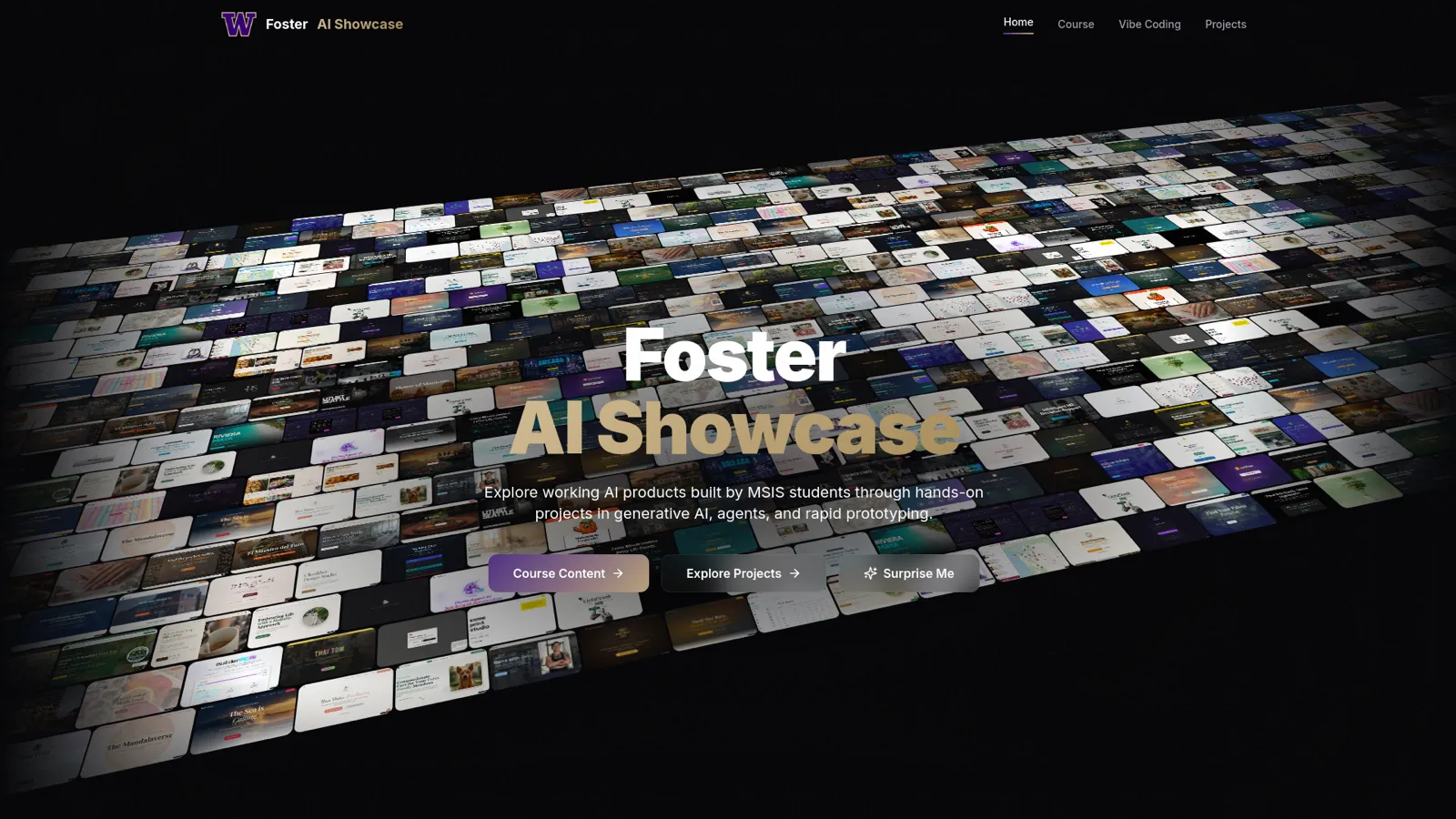 Student showcase
Foster AI Gallery
Explore the work of my students, deployed tools, games, sites, and agents built in weeks, and the vibe-coding techniques behind them.
Browse the gallery→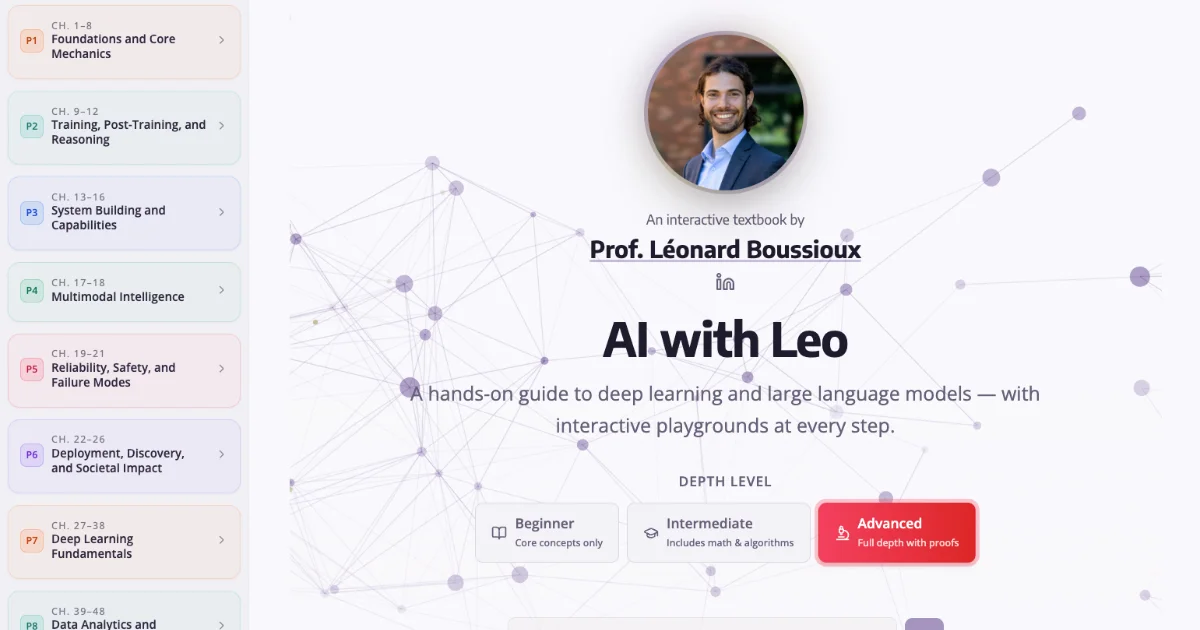 Interactive textbook
AI with Leo
An interactive textbook on the fundamentals of machine learning, deep learning, and generative AI, with hands-on playgrounds at every step.
Open the textbook→
Open & User Innovation Conference · Harvard Business School
The Crowdless Lab? Vibe Coding, Agent Ecosystems, and the Future of Research
Generative AI is collapsing the research crowd of collaborators, coders, and assistants into a single, AI-augmented researcher who can staff an entire lab with agents. I build that lab live: vibe coding tools from natural language, assembling teams of agents, wiring them into a shared knowledge graph that serves as a second brain, and orchestrating them into pipelines that run from question to result. But capability is not the same as quality, my research on human-AI collaboration shows these systems can raise individual work quality while narrowing the diversity of ideas a group produces, and that persuasive AI outputs can substitute compliance for the independent verification rigorous research demands. As the marginal cost of research approaches zero, the researcher's comparative advantage shifts from production to judgment, from generating results to knowing which expeditions to pursue.
MIT Universal AI Summit
GenAI & Accelerating Problem-Solving
Research talk
The Hidden Cost of AI-Assisted Creativity
INFORMS Analytics Society
Combining LLMs & OR/MS for Smarter Decisions
How LLMs combine with operations research for decision-making: wiring them into optimization solvers, analytics pipelines, and natural-language interfaces. With Segev Wasserkrug & Wei Sun (IBM Research).
Columbia Business School
Teaching MBAs to Build with AI from Day One
If AI can build websites, write code, and analyze data with little technical expertise, what should business schools still teach? A conversation on why building beats lecturing, and why human judgment, problem formulation, and domain expertise matter more than ever.
Lecture decks
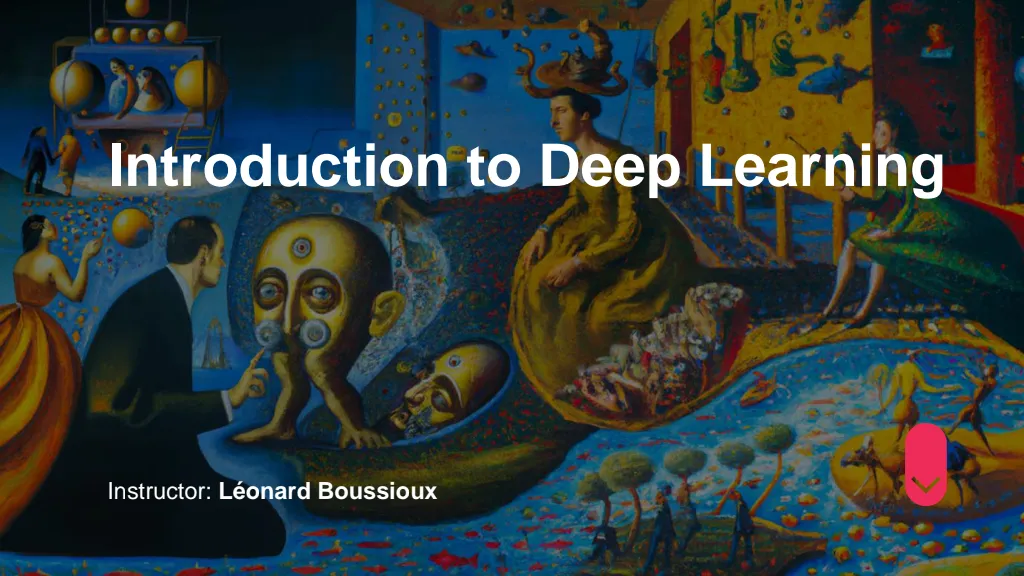
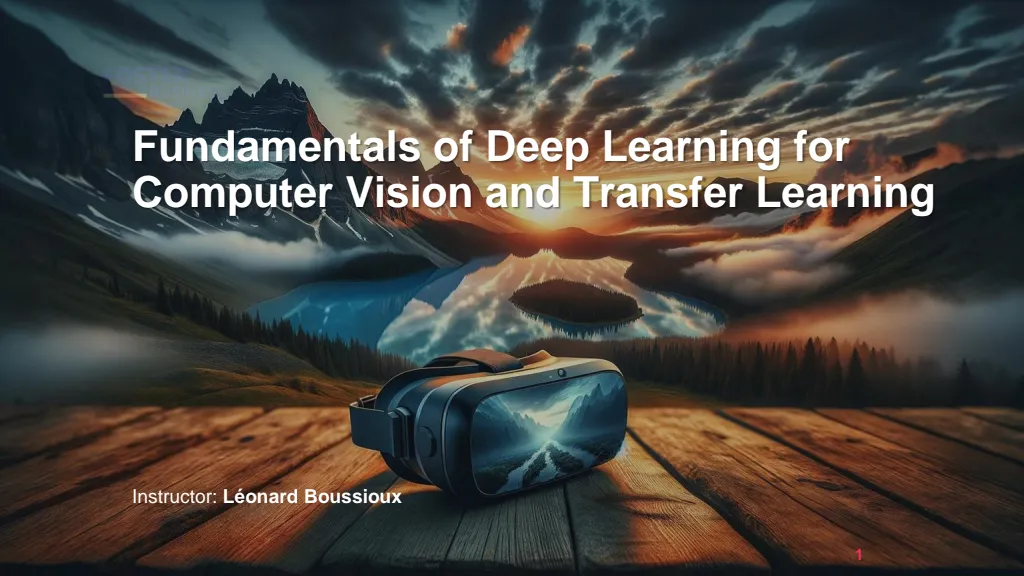
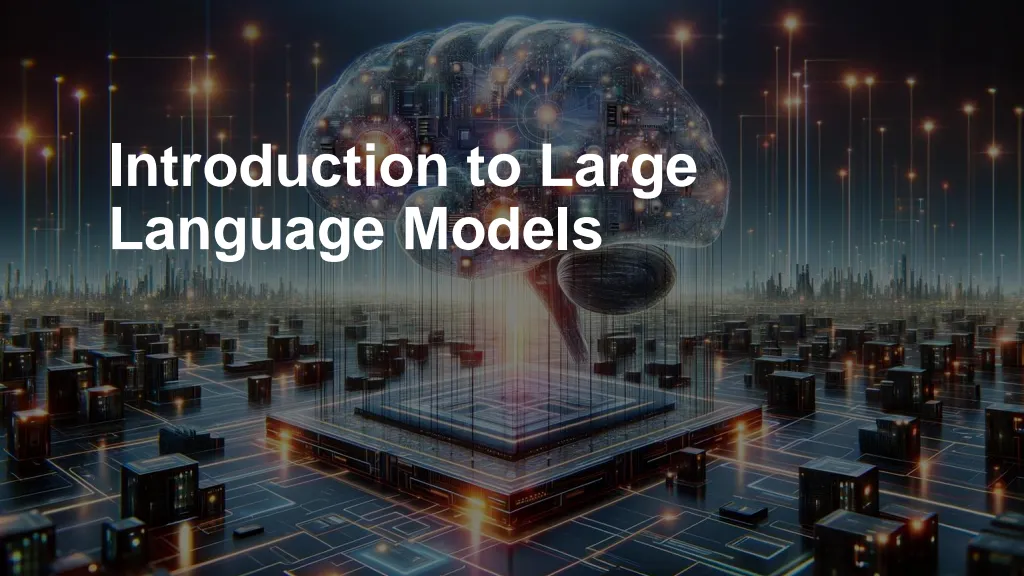
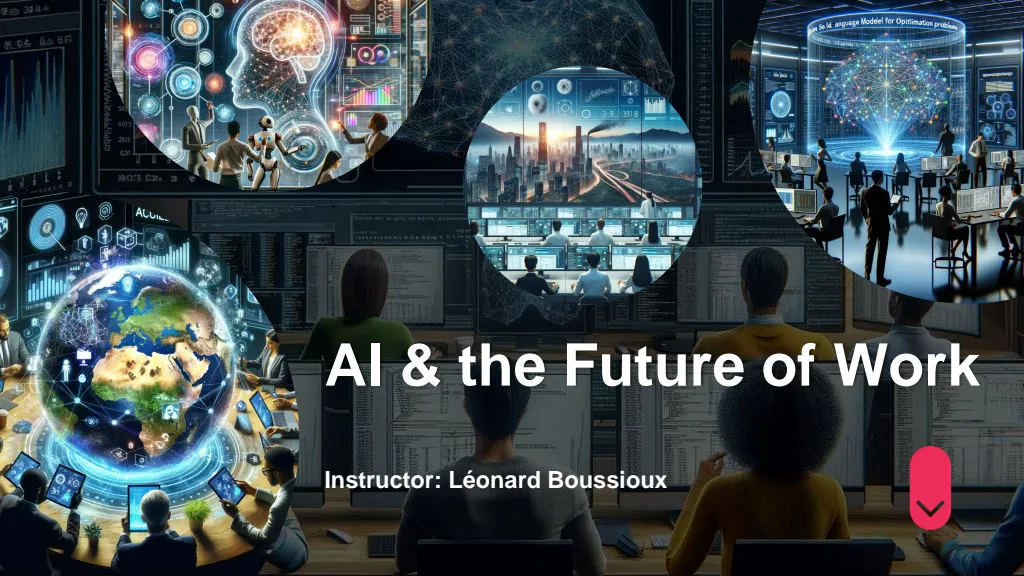
Eight self-contained slide decks across two tracks. Click any slide to open the full deck.

Runnable notebooks
Companion Google Colab notebooks for the lectures. Open one and run it in your browser, no setup required.
Fundamentals of ML
6 tutorialsFundamentals of Deep Learning
3 tutorialsNatural Language Processing
2 tutorialsDeployment & APIs
1 tutorialPublications on GenAI
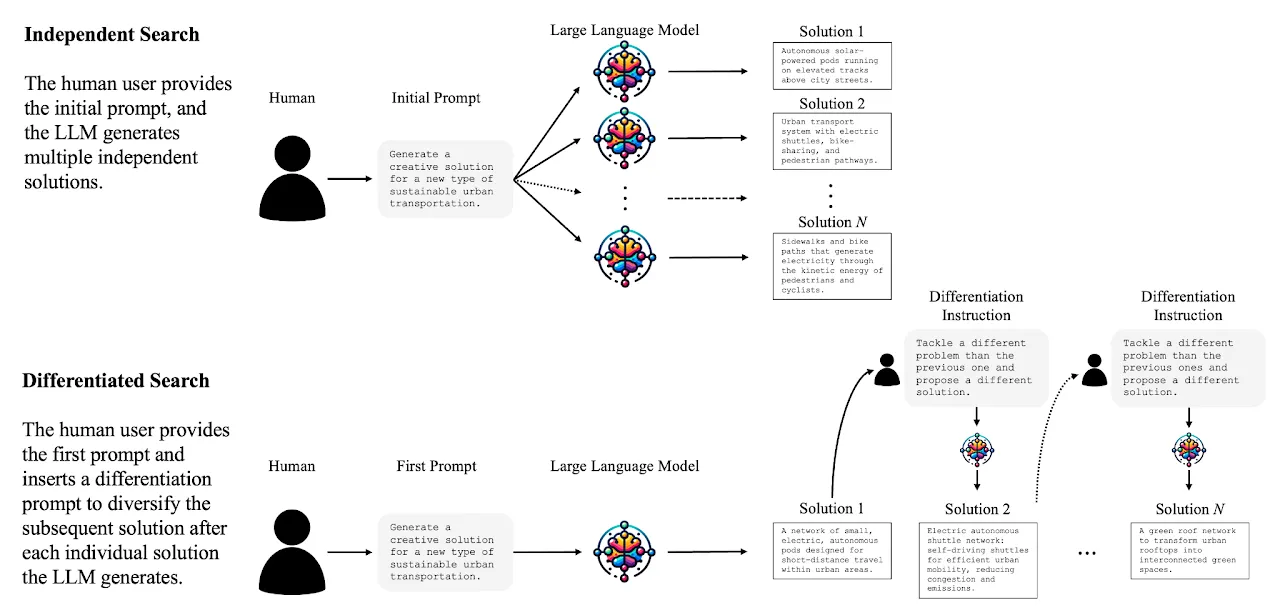
The Crowdless Future? Generative AI and Creative Problem-Solving
Léonard Boussioux, Jacqueline N. Lane, Miaomiao Zhang, Vladimir Jacimovic, Karim R. Lakhani
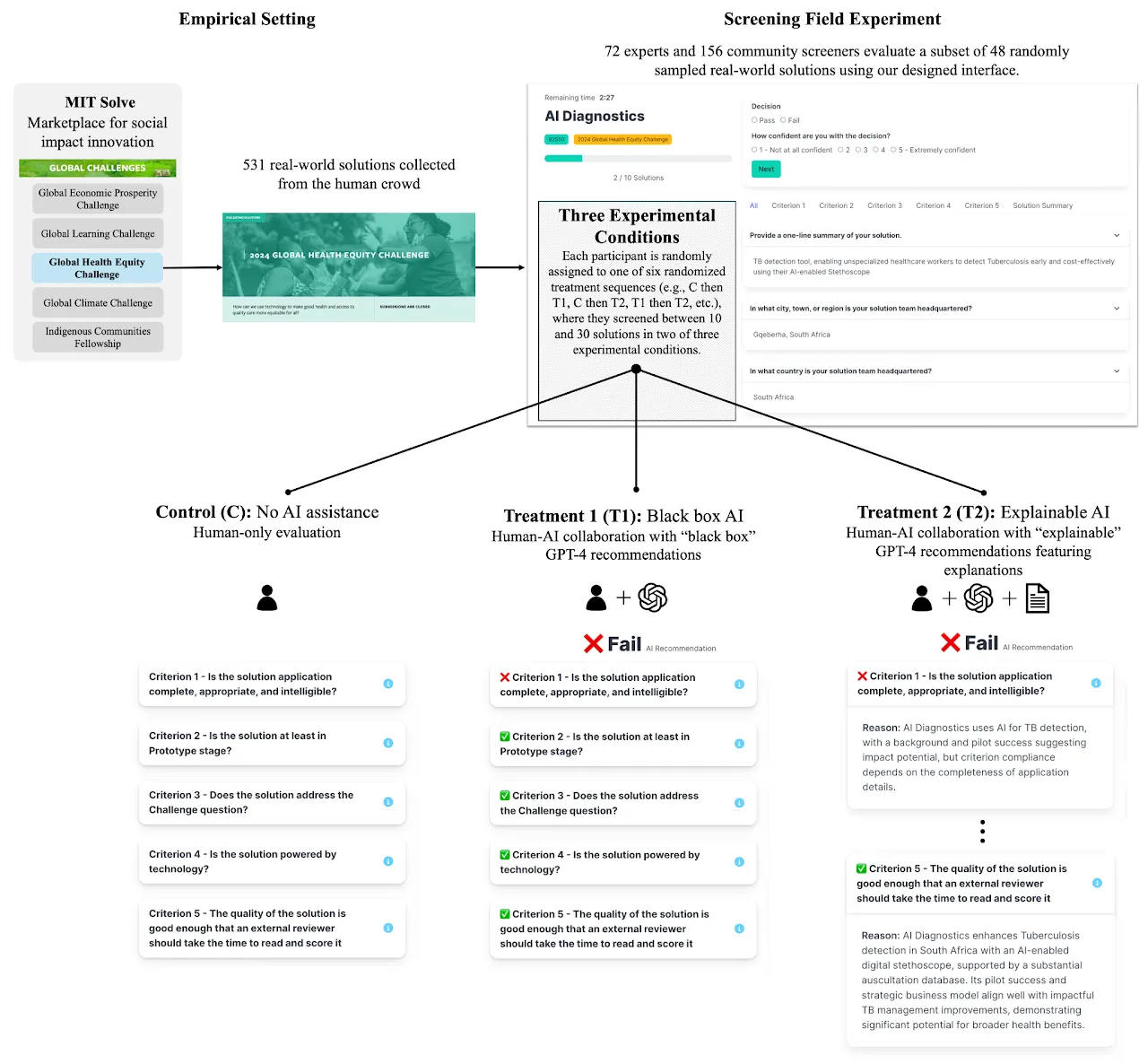
The Narrative AI Advantage? GenAI-Augmented Evaluations of Early-Stage Innovations
Jacqueline N. Lane, Léonard Boussioux, Charles Ayoubi, Ying Hao Chen, Camila Lin, Rebecca Spens, Pooja Wagh, Pei-Hsin Wang
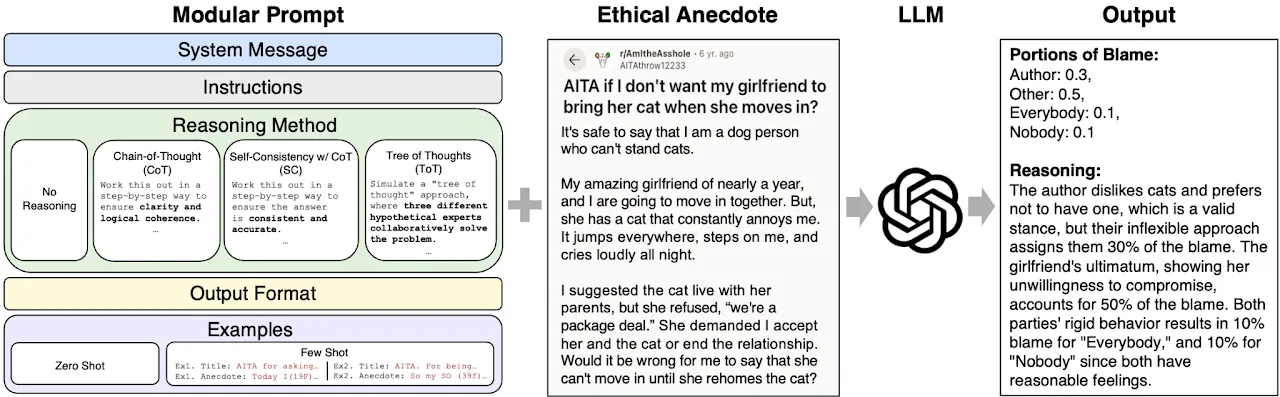
Agreeing to Disagree: Human-AI Influence in Ethical Decision-Making
Caitlin Cunningham, Rebekah Baik, Léonard Boussioux, Leela Nageswaran
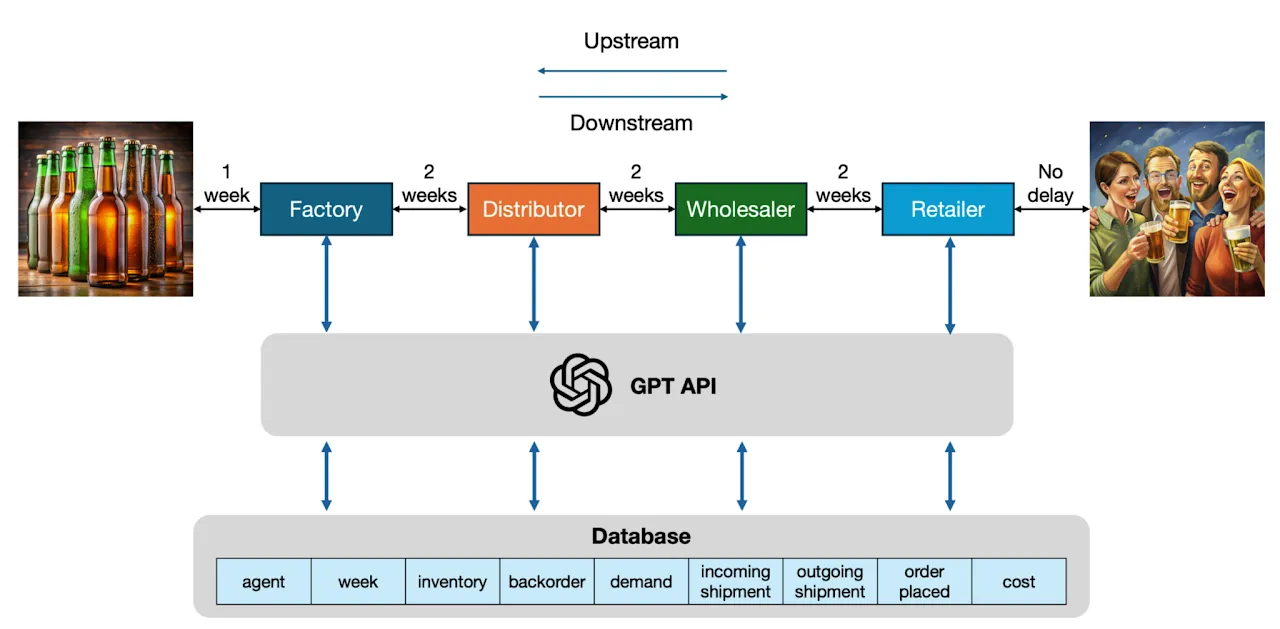
Socratic Iterative Reasoning: Enhancing LLMs in the Beer-Game Supply Chain
Léonard Boussioux, Hongyu Chen, Ming Fan, Apurva Jain
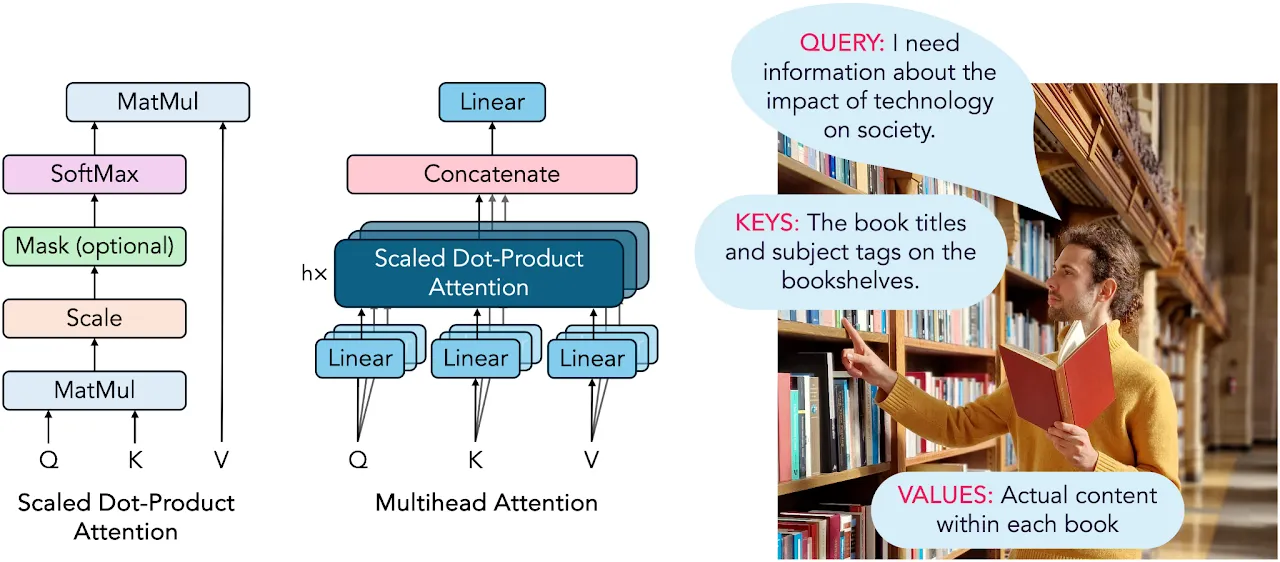
Combining Large Language Models and OR/MS to Make Smarter Decisions
Segev Wasserkrug, Léonard Boussioux, Wei Sun
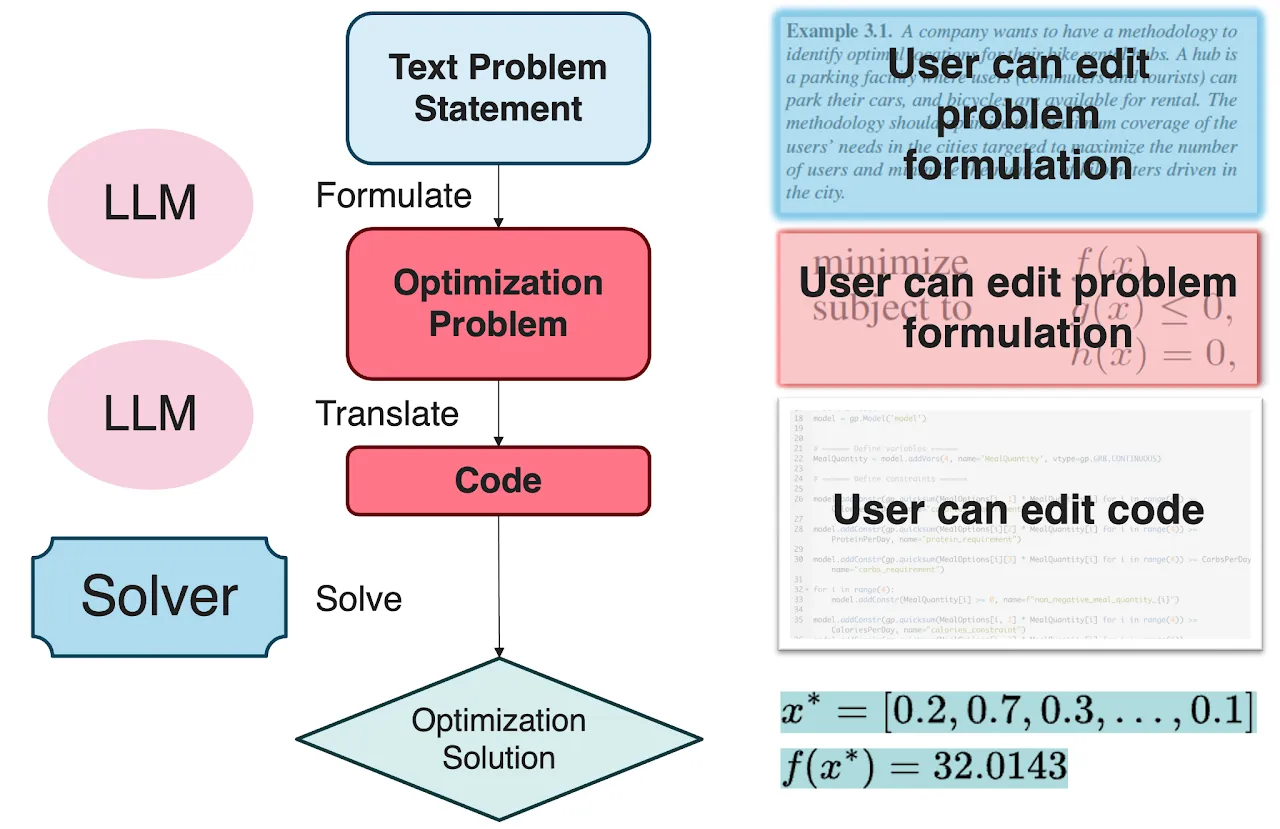
From Large Language Models and Optimization to Decision Optimization CoPilot
Segev Wasserkrug, Léonard Boussioux, Dick den Hertog, Farzaneh Mirzazadeh, İlker Birbil, Jannis Kurtz, Donato Maragno
Media & conversations on my teaching
Teaching & research, featured
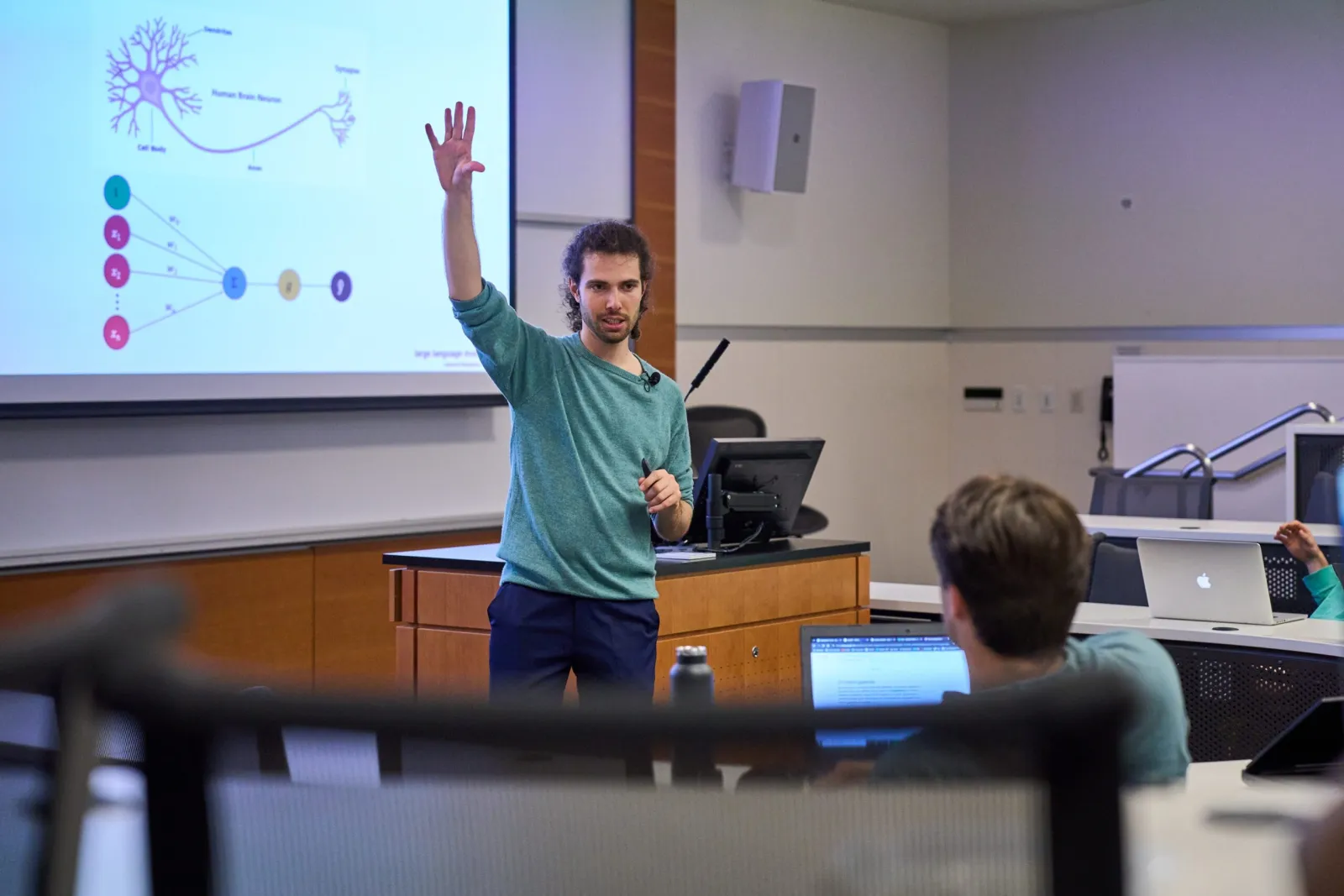
A New Era of AI and Human Ingenuity in Business School
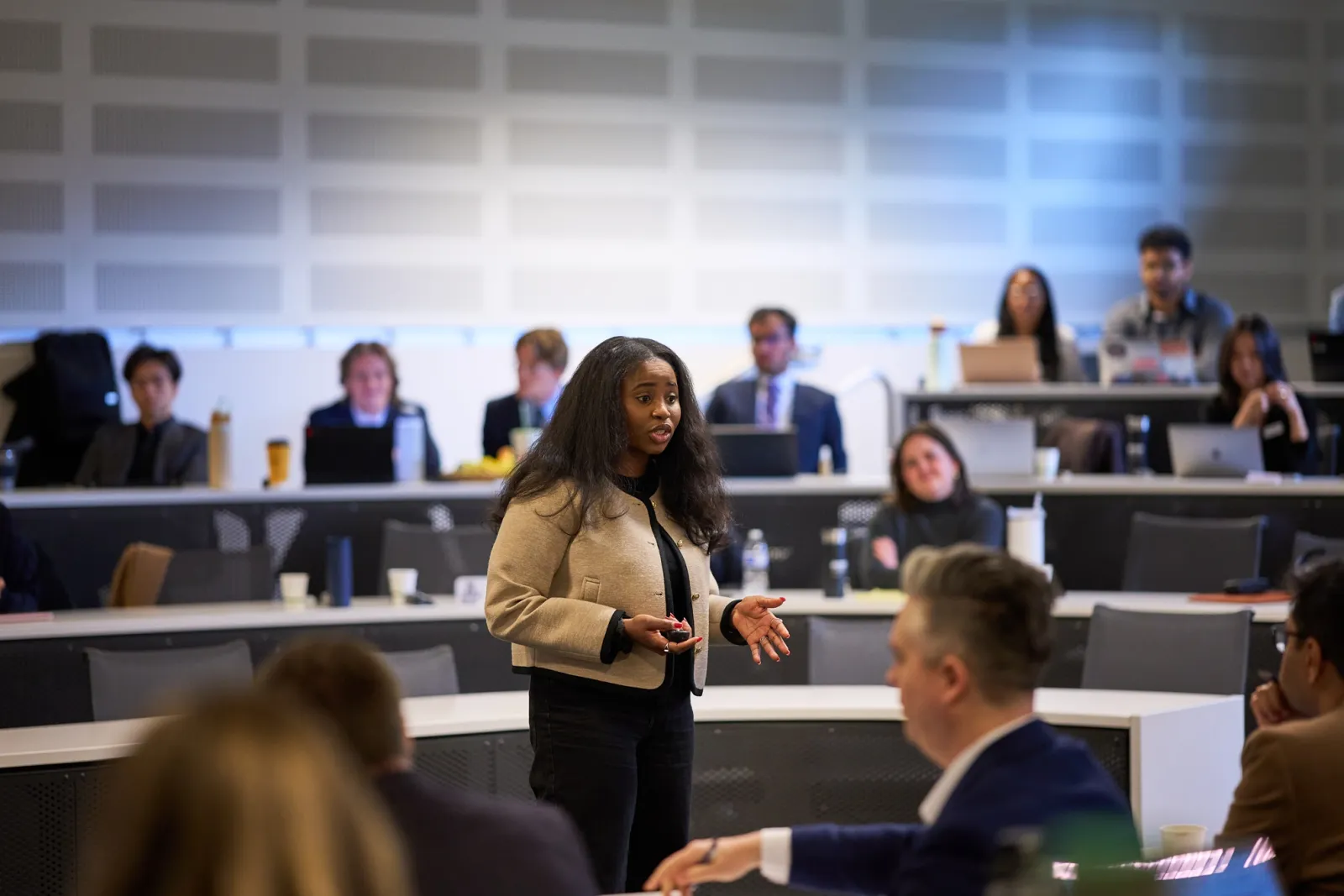
MSIS Demo Day: What Students Built with AI
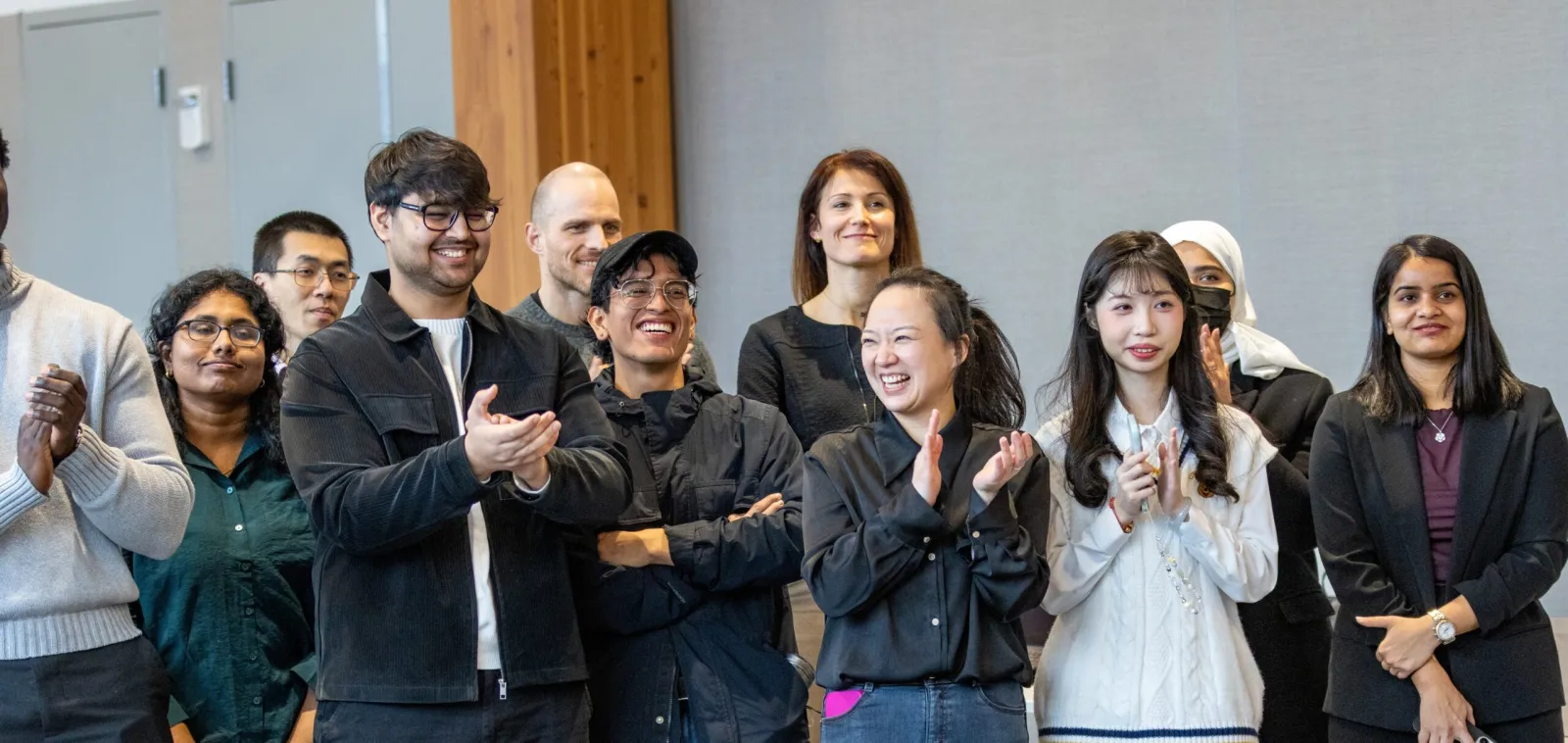
What Can You Build With AI? Students Answer the Challenge
Podcasts & webinars
 ▶
▶What Is the Real Impact of AI on Creativity?
 ▶
▶The Pitfalls of Human-AI Interaction
 ▶
▶Why You Don't Have to Specialize Anymore
 ▶
▶How to Use Art to Build a Culture of Innovation
 ▶
▶How This Professor Teaches AI
On the TEDx stage
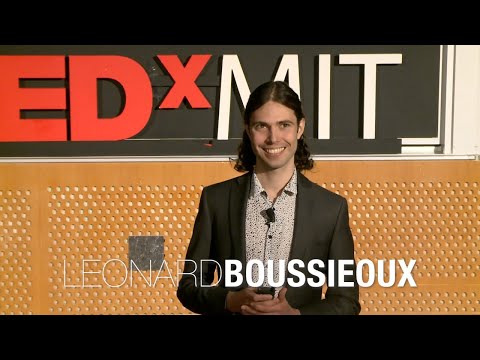 ▶
▶Let Art Be Your Superpower!
The future of artistry: the transformative power of AI in art and creativity, and the artist already waiting inside each of us.
 ▶
▶How to Solve the UN's Sustainable Development Goals in 5 Minutes
A collective approach to the UN SDGs, where generative AI lets even non-experts drive real-world impact.
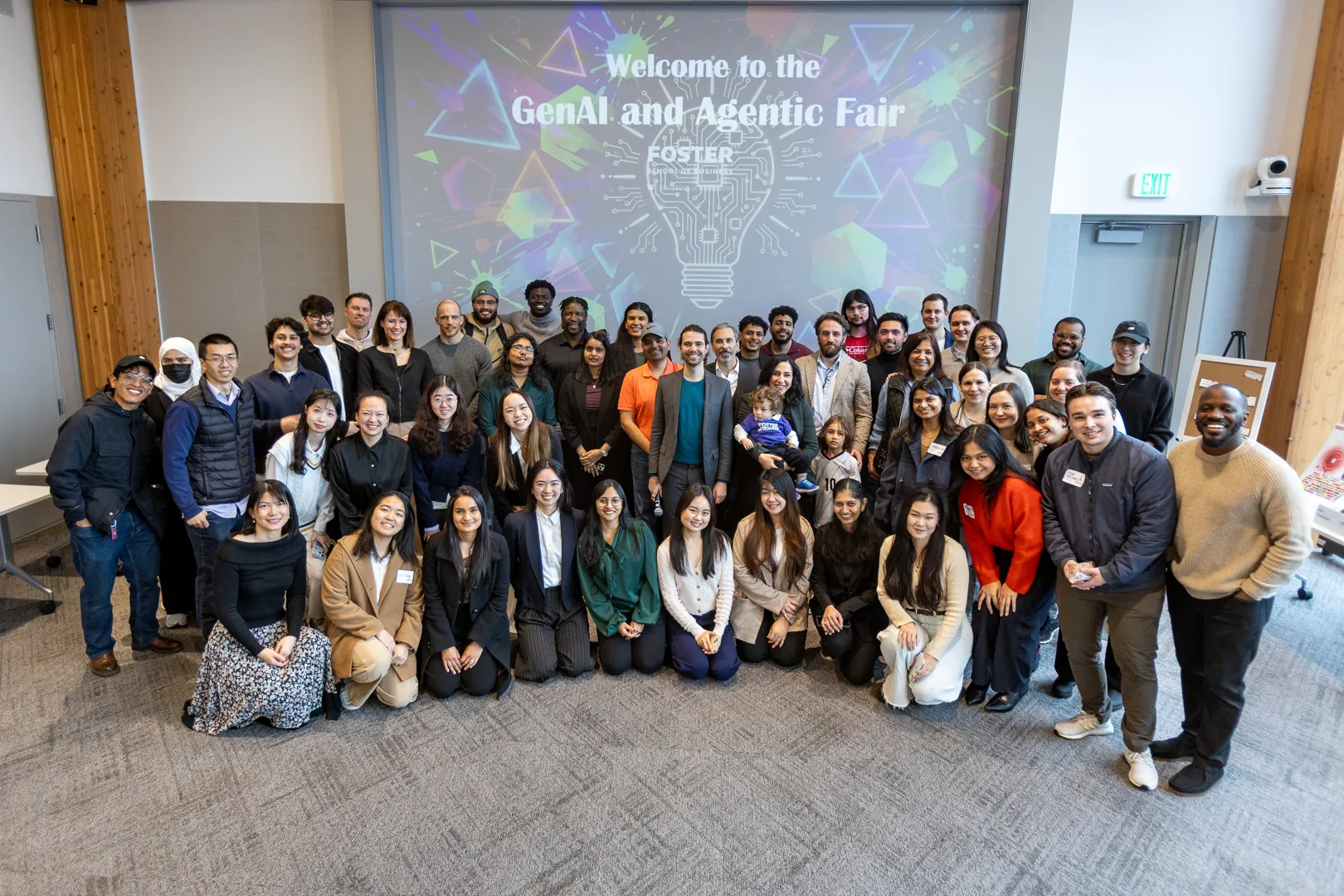
GenAI & Agentic Fair: showcase floor
The course ends with a public, poster-session-style fair where every student demos a working product live to industry judges and Foster alumni. No exam, just a laptop, a real demo, and a stranger asking “why does it do that?” It is the most honest assessment instrument I have ever used.
From Foster classrooms to global stages
The method behind this showcase is something I teach and share with faculty and leaders around the world: rapid prototyping with generative AI, live student products, and showcase-driven learning.
Want a seminar, workshop, or collaboration?
I bring generative AI education to MBAs, executives, graduates, and undergraduates, and love teaming up with industry on real GenAI problems.